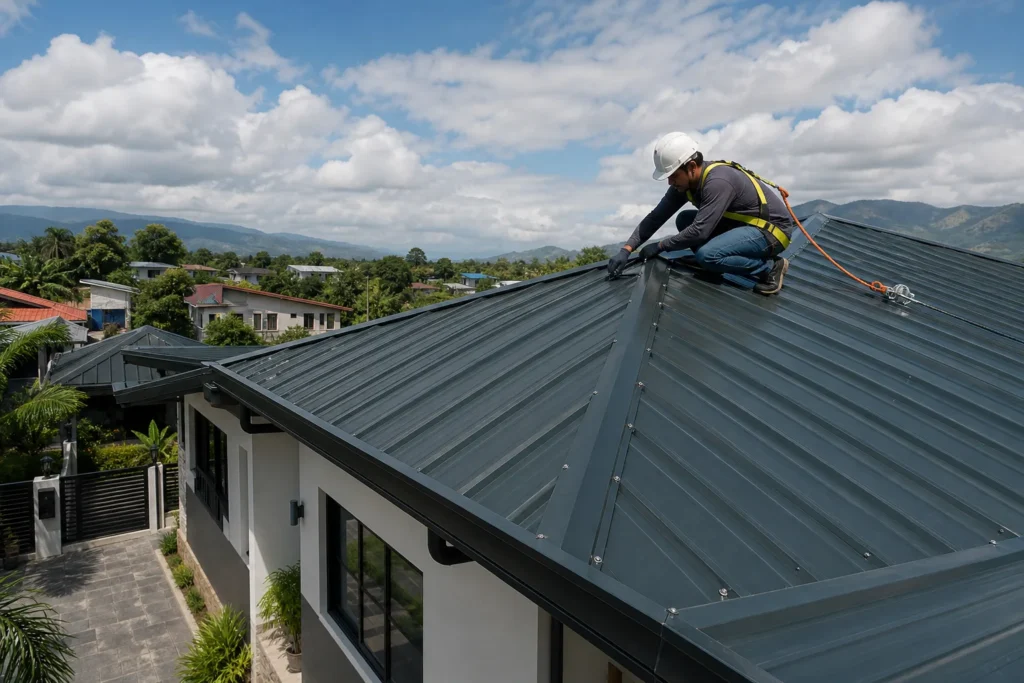
A durable roof is a complete system rather than a choice of covering alone. During strong winds and heavy rain, the framing, fasteners, flashing, gutters and connections to the main structure must work together. Good engineering and careful installation are more valuable than relying on a product description without considering the building and its location.
Start with an appropriate engineered design
Roof shape, pitch, span and overhang influence wind pressure. An architect or structural engineer can specify framing and connections for the site conditions and the applicable building requirements. Exposed coastal or elevated properties may face different loads from sheltered urban lots. Avoid changing truss members, removing braces or adding heavy equipment without checking how the alteration affects the structure.
Pay attention to every connection
High winds can exploit one weak point. Roof framing must be securely connected through the walls to the supporting structure, creating a continuous load path. Sheets, tiles and ridge components need the correct fastener type, spacing and edge treatment. Installers should follow the approved details and manufacturer guidance rather than substituting convenient hardware on site.
Keep rain outside the building envelope
Flashing around roof edges, valleys, walls, vents and penetrations deserves close inspection. Gutters and downspouts should carry intense rainfall away without discharging beside foundations or entrances. A suitable underlayment provides additional protection if wind-driven rain passes the outer covering. Any solar panels, water tanks, antennas or canopies attached to the roof also need properly designed mounts and sealed penetrations.
Inspect and maintain before storm season
Check for loose fasteners, corrosion, cracked sealants, damaged flashing and blocked drainage. Trim hazardous branches and secure lightweight objects around the property. After severe weather, inspect safely from the ground first and arrange a professional assessment if there are leaks, displaced materials or visible deformation. Prompt repairs are usually smaller and less costly than damage allowed to spread through ceilings, insulation and walls.