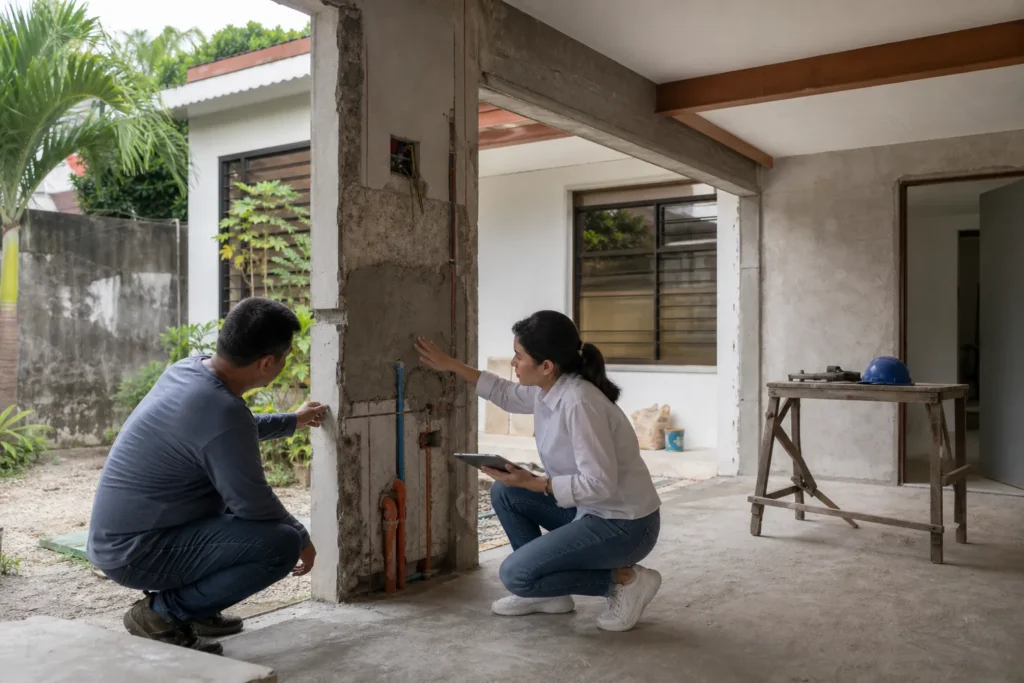
An older home can offer a good location, established space and strong character, but renovation should begin with investigation rather than demolition. Hidden moisture, outdated wiring, altered structural elements and undocumented additions can change the cost and sequence of the project. A careful assessment helps separate cosmetic improvements from essential repairs.
Document the existing condition
Measure the house and record cracks, leaks, uneven floors, damaged ceilings and areas with persistent odors or staining. Ask qualified professionals to examine the structure when walls will be removed, openings enlarged or another floor added. Existing plans are helpful, but site verification remains important because past work may not match the drawings.
Check services before selecting finishes
Inspect the electrical panel, circuits, outlets, plumbing lines, drainage and water pressure. Renovation is the right time to correct unsafe connections, undersized wiring or leaking pipes that would otherwise be hidden behind new finishes. Plan locations for air-conditioning, appliances, internet equipment and water heaters early so that walls and ceilings do not need to be reopened later.
Control moisture at its source
Peeling paint and mold are symptoms, not complete diagnoses. Look for roof leaks, failed flashing, cracked exterior walls, plumbing faults, rising damp and poor bathroom ventilation. Repair the source and allow affected materials to dry before repainting. Choose materials suited to humid conditions, especially for kitchens, bathrooms, exterior walls and rooms with limited airflow.
Renovate in a logical sequence
Complete structural repairs, roofing, waterproofing and concealed services before cabinetry, flooring and decoration. Define which parts of the home must remain usable if the household will stay during construction. Use a written scope, material schedule and approval process for changes. Keep a contingency for genuine discoveries, but do not allow every preference change to become an emergency expense. A final inspection should include water testing, electrical checks, doors, windows, drainage and all agreed corrections.