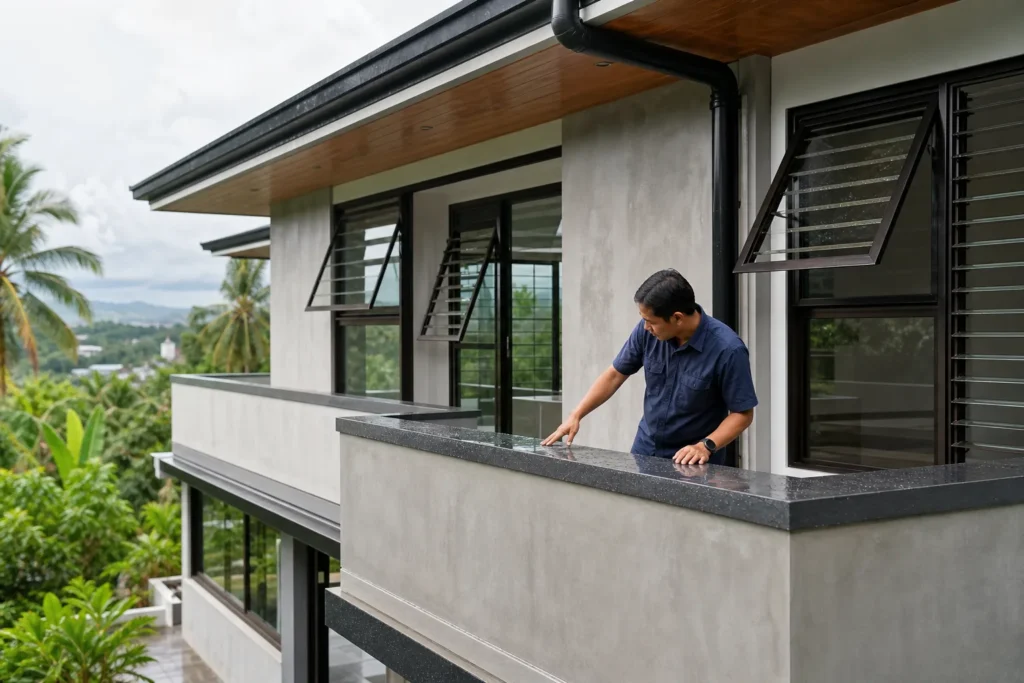
Cebu’s combination of heat, humidity and intense rainfall makes moisture management a central part of home design. Waterproofing and ventilation should be planned as connected systems. Keeping rain out, directing water away and allowing indoor moisture to escape protects finishes while making rooms more comfortable.
Direct water away from the house
Grade exterior surfaces so rain does not collect against walls or foundations. Roof gutters, downspouts, balconies and paved areas need clear discharge routes sized for heavy rainfall. Drains should remain accessible for cleaning. Before developing a lot, understand where water enters and leaves the property so improvements do not transfer flooding to a neighbor or trap water in a lower area.
Detail wet areas carefully
Bathrooms, balconies, roof decks and utility spaces require a continuous waterproofing system beneath the visible finish. Corners, drains, pipe penetrations and changes in level are common failure points. The substrate must be properly prepared, slopes must lead toward drains and the completed membrane should be tested before it is covered by tiles or protective layers.
Encourage useful airflow
Position operable windows or vents to support cross-ventilation where the site allows it. High-level openings can release warm air, while shaded openings reduce heat gain. Bathrooms and kitchens may need correctly sized exhaust fans vented outdoors. Air-conditioning can improve comfort, but oversized units that cool too quickly may not remove moisture effectively and should not replace basic ventilation planning.
Choose finishes after solving the cause
Moisture-resistant coatings and boards help only when leaks, condensation and drainage problems have already been addressed. Allow new concrete and plaster to dry adequately before applying sensitive finishes. Inspect sealants, exterior cracks, roof joints and drainage periodically, especially before the wettest months. If staining or mold returns after cleaning, investigate the water source instead of repeatedly covering the visible mark.